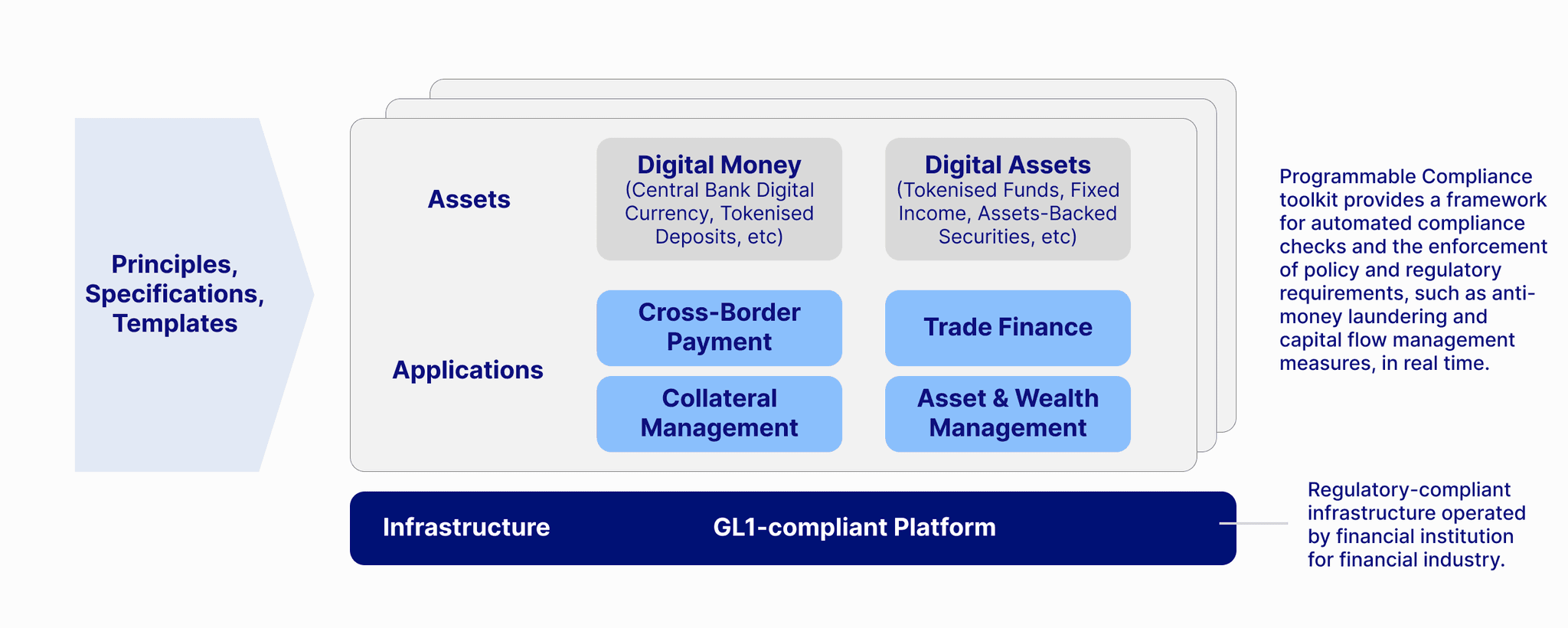
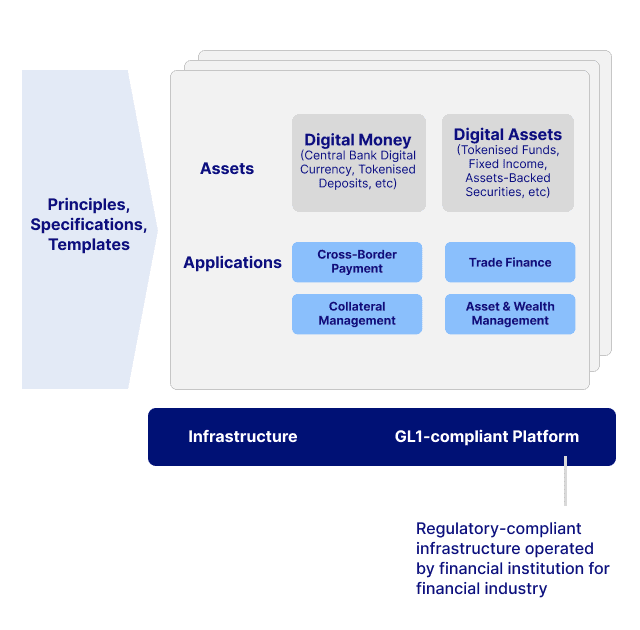
Technology specifications would be made publicly available, and members would be able to build and deploy applications with ease. Industry standards and open-source protocols may be used where appropriate. Where existing standards have not been developed or are inadequate, appropriate efforts would be made to ensure that designs are flexible and could be proposed or incorporated into future standards.
Rules and regulations of various jurisdictions are actively considered in the development of common principles, policies and standards for operating shared ledger infrastructures. Jurisdiction-specific policy controls should be developed at the applications layer and not natively built into a single platform. The legal and regulatory requirements that apply to an end-user may depend on an analysis of the commercial application, service and location of the end-user.
Alignment on governance, risk management controls and settlement arrangements conventions for cross border transactions. This provides clarity on roles, responsibilities and controls needed to safeguard market integrity and financial stability.
Programmable Compliance: Compliance Architecture for Regulated Tokenised Assets
CAST: Compliant Architecture for Security Tokens
Creation and provision of templates including programmable compliance checks to build an ecosystem of compatible service providers.